
Phosphorus management
23 February 2026 at 12:00
For a long time, phosphorus has played a well-defined role in human society: it is an essential element for life and a key raw material in agricultural fertilizers. However, a recent study suggests that this common element may possess an unexpected ability—serving as a substitute for precious metal catalysts in certain chemical reactions. Researchers at the University of California, Los Angeles (UCLA) recently published a paper in Nature, showing that through light activation, inexpensive phosphorus compounds can exhibit catalytic behavior similar to platinum or palladium, successfully enabling critical reactions in pharmaceutical synthesis. This discovery expands phosphorus’s application from agriculture and life sciences into the high-value domain of fine chemical production.
The breakthrough arose from a serendipitous observation. While conducting experiments on carbon–nitrogen bond formation, the team noticed that the reaction proceeded far more efficiently than anticipated. Further investigation revealed that under light irradiation, phosphorus can enter a transient yet highly reactive state. With the influence of photoactive molecules, otherwise inexpensive and abundant phosphine compounds are activated to form reaction centers that mimic metal catalysts, driving the chemical transformation. The researchers note that this photoactivated phosphorus exhibits catalytic capabilities comparable to transition metals such as palladium or iridium, although its mechanism is fundamentally different from conventional metal-catalyzed systems.
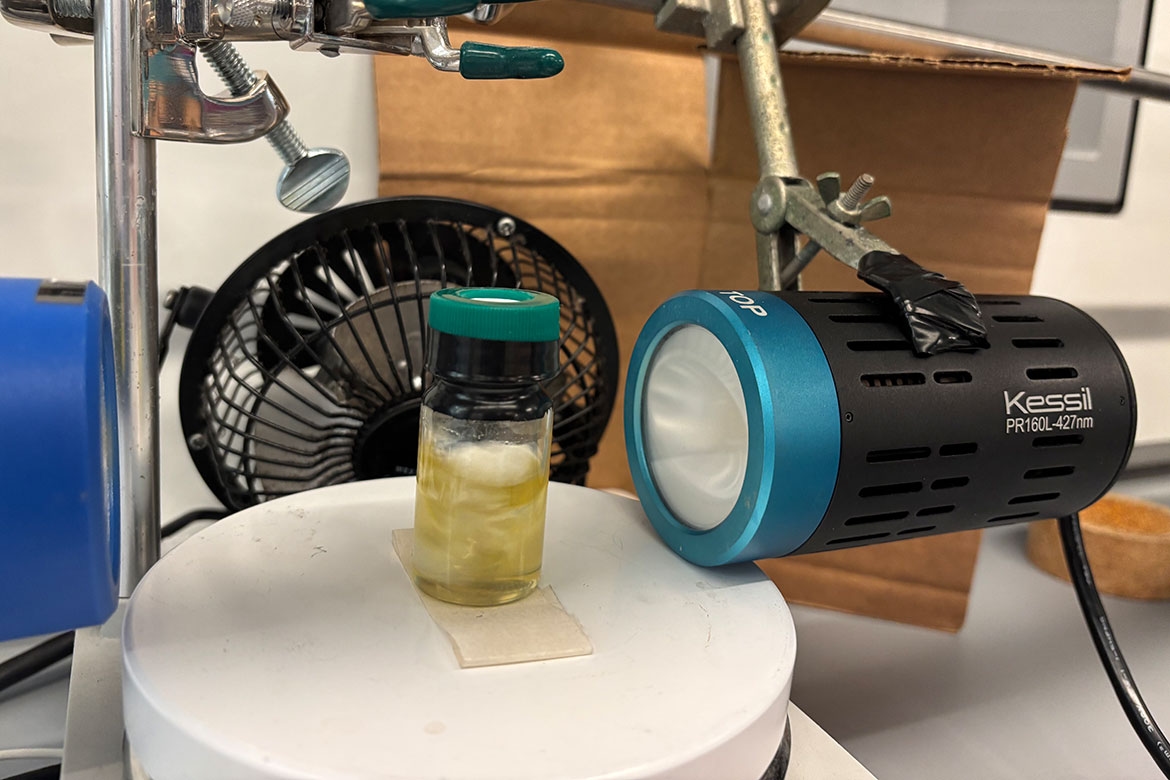
The reaction in focus is hydroamination, in which nitrogen-containing compounds are added across carbon–carbon double bonds to form carbon–nitrogen bonds. These bonds are among the most common and important structures in modern drug molecules, as virtually all pharmaceuticals contain nitrogen atoms. However, stably introducing nitrogen into organic frameworks at the molecular level is challenging, which is why the pharmaceutical industry has long relied on precious metal catalysts like platinum and palladium for such reactions. The UCLA team found that photoactivated phosphorus can operate via a mechanism known as “dual electron transfer,” enabling both two-electron and single-electron transfer pathways. This dual functionality allows it to accommodate a broader range of nitrogen-containing substrates, achieving chemical versatility approaching that of precious metal catalysts.
If this catalytic strategy can be reliably scaled to industrial production, the implications could be significant. Precious metal catalysts are costly, energy-intensive to extract, environmentally impactful, and subject to supply risks due to limited distribution and geopolitical factors. In contrast, phosphorus is more abundant and inexpensive. If phosphorus can replace precious metals in certain key reactions, it could reduce pharmaceutical production costs and decrease dependence on scarce metals.
This discovery also offers a new perspective on the value of phosphorus. Historically, attention has focused on phosphorus in agriculture and environmental contexts—phosphate resource depletion, fertilizer efficiency, and eutrophication. This study demonstrates that phosphorus is not only an agricultural resource but could also serve as a functional material in fine chemical synthesis. From a commodity consumed in fertilizers to a potential catalyst in high-end manufacturing, the scope of phosphorus applications is evolving. If challenges related to catalyst stability and recyclability are addressed, phosphorus catalysts could be reused in fine chemical production, forming a small-scale “industrial phosphorus cycle” complementary to phosphorus recovery systems in agriculture. As research progresses, the element’s potential in the chemical industry may become increasingly apparent.
Sources:
https://newsroom.ucla.edu/releases/phosphorus-catalyst-in-chemical-reactions-over-precious-metals-reesearch-ucla